
The Hospital Go-Bag: Why It’s Less About Being Organized and More About Peace of Mind
Most families don’t think to put a hospital go-bag together until they’re already running out the door.
In that moment? You aren’t thinking about medication doses or insurance cards. You’re thinking about them. You just want your loved one to be okay. But then you get to the hospital and the questions start coming:
- What medications are they on? You try to remember—there’s the blood pressure one and the new one the cardiologist added, but what’s the dose?
- Do they have any allergies? Yes, but what exactly was the reaction?
- Where is the insurance card? Still in their wallet. At home.
Then you reach for your phone to call a sibling and realize your battery is at 4%. That charger you almost grabbed? It would be really helpful right now.
This is the moment when a caregiver go-bag stops feeling like another box on your to-do list and starts feeling like the most supportive thing you can do for your future self.
You Aren’t “Behind” for Not Having One Yet
If this has been floating around your mental list for months, take a breath.
You are notfailing. As a sandwich generation caregiver, you’re managing kids, aging parents, and a career. The “important-but-not-urgent” tasks always get pushed to the bottom. But here is the shift: a go-bag isn’t just about being “prepared.” It’s about closing an “open loop” in your brain.
Once it’s done, there is an emotional exhale. You’ve handled the thinking while you were calm, so you don’t have to do it while your heart is racing.
What Actually Goes in a Hospital Go-Bag?
You don’t need anything fancy. A tote, a backpack, or that bag you never use. Here’s the hospital emergency checklist of what matters most:
- The Documents: Copies of their ID, insurance cards, and any Advance Directives or Medical Power of Attorney. These are nearly impossible to find in a crisis. I keep a digital copy in a locked-folder on my phone.
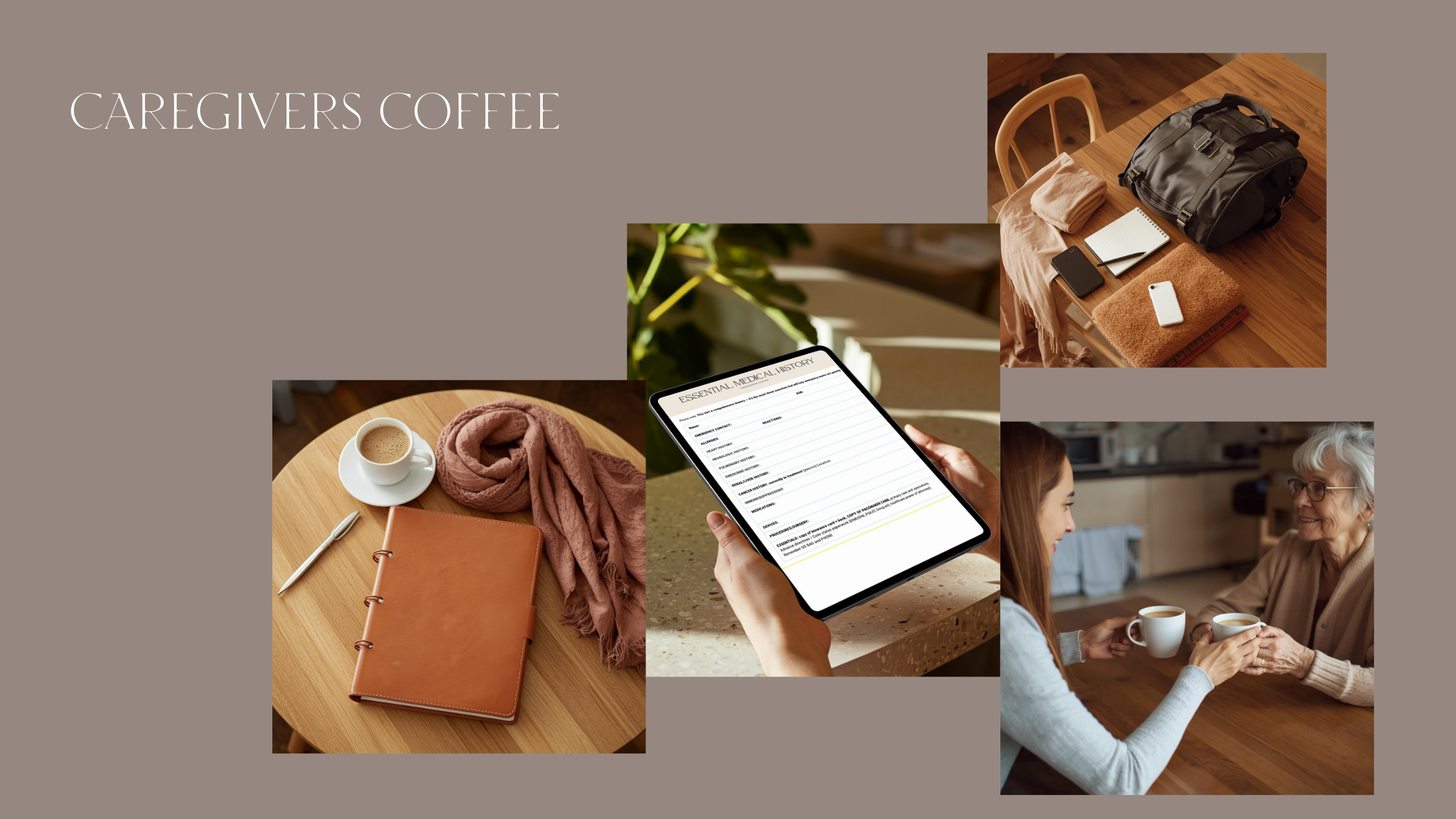
- The Medical Information Sheet: This one-pager puts the most important info in one place: current meds, allergies, major diagnoses, and recent surgeries.
- Practical Comforts: A long phone charger, a backup battery bank, glasses/hearing aids, and a sweatshirt (hospitals are always freezing).
- Caregiver Basics: Pack a snack (non-perishable) and a water bottle for you. You can’t advocate for your parent if you haven’t eaten in 12 hours.
One 3-Minute Task You Can Do Right Now
Before you even find a bag, pull out mom’s phone and repeat this on your phone:
- On iPhone: Go to the Health app > Medical ID.
- On Android: Go to Settings > Safety & Emergency.
Add their primary conditions and emergency contacts. If a first responder arrives when you aren’t there, this information is accessible even if the phone is locked.
Where to Keep Your Bag
A caregiver go-bag only works if you can grab it in ten seconds. Keep it near the front door, in a hall closet, or even in your trunk. Crucial step: Tell your spouse or sibling exactly where it is. Emergencies don’t always wait for the primary caregiver to be home.
As my own insurance policy, I keep all this information on my phone in a locked folder.
The Most Important Thing in Your Bag
If you only put one thing in this bag today, let it be a current medication list.
As a nurse, I can tell you: this list is so much more than names and dosages. It tells the medical team the story of what your family member is currently being treated for, even if you’re too stressed to remember the exact diagnoses in the moment.
I know that even making a list can feel like “one more thing” on an already overflowing plate. I want to make this step as easy as possible, so please—just use mine.
https://caregiverscoffee.myflodesk.com/medlist
This is the same medication list in my go-bag. Print it out, fill it in when you have a quiet five minutes, and tuck it into that bag after you screen shot mom or dad’s list. Next time you go to a doctor’s appointment with your parent, double check this list and make sure everyone is on the same page.
A Gentle Next Step
I want to leave you with this: You are doing a hard thing, and you are doing it with so much heart.
Preparing a go-bag isn’t about expecting the worst; it’s about being kind to your future self. It’s about making sure that if a “hard day” comes, you aren’t scrambling for papers or medication bottles—you’re right where you need to be: holding their hand.
Find a bag. Print the list. Take a breath.
Leave a Reply Cancel reply

This step-by-step guide helps you create a reliable medical record system -so you can stay organized.


Be the first to comment